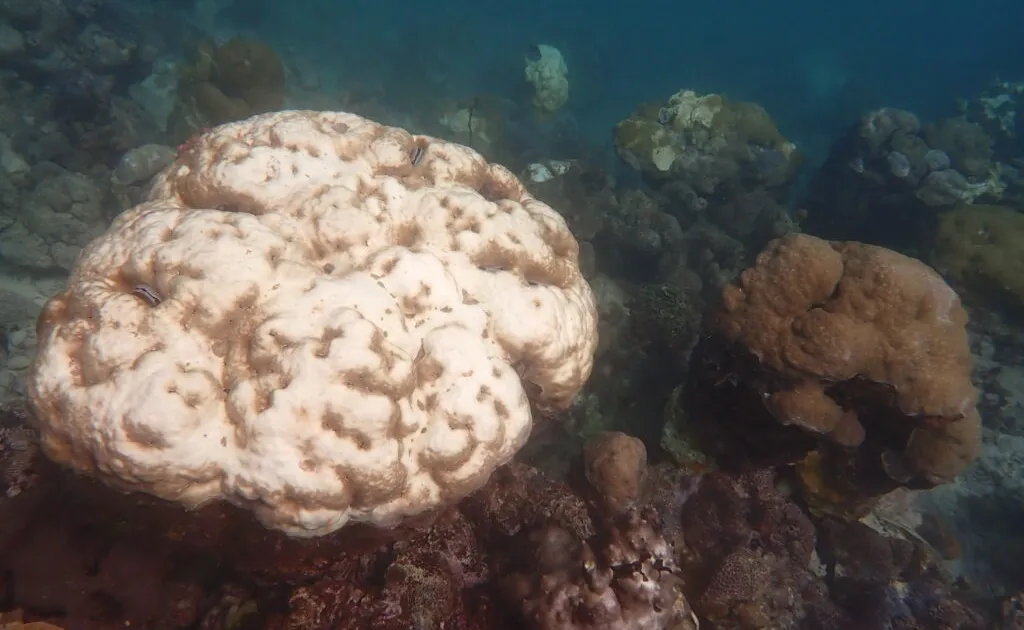
When two corals look identical but have different DNA, are they really the same species?
Imagine diving along a coral reef and encountering two coral colonies with similar shapes, coloration, and skeletal features. Based on appearance alone, you might identify them as the same species. But what if DNA analyses revealed that they belong to distinct evolutionary lineages?
This is the fascinating world of cryptic diversity, where organisms that look remarkably similar may have different evolutionary histories. It also raises a deceptively simple question: Are cryptic lineages examples of variation within a species, or are they species we have not recognized yet?
What exactly is a species?
Defining a species is not as straightforward as it might seem. The biological species concept emphasizes the ability to interbreed and reproductive isolation. The morphological species concept relies on physical characteristics. Phylogenetic approaches examine evolutionary relationships and genetically distinguishable lineages.
Each approach offers useful information, but each also has limitations. Corals can reproduce sexually and asexually, hybridization can occur, and reproductive isolation is often difficult to measure directly. Their skeletal forms can also vary with environmental conditions such as light, depth, and water movement. As a result, appearance and evolutionary history do not always align.
What are cryptic lineages?
Cryptic lineages are genetically distinguishable evolutionary groups that are difficult to separate using conventional morphological characteristics. They may occur within a currently recognized species, even when the organisms appear nearly identical in the field.
Imagine sampling several massive Porites colonies from different reef sites. They may all receive the same initial species identification based on their morphology, yet genetic analyses might reveal consistent, distinct groups. Those patterns can reflect historical isolation, restricted gene flow, population structure, or deeper evolutionary divergence.
Importantly, identifying a cryptic lineage does not automatically mean discovering a new species. Some lineages represent differentiated populations within one species. Others may ultimately prove to be independently evolving species.
Cryptic lineages versus variation within a species
Every species contains genetic variation. Mutation, genetic drift, natural selection, and gene flow all shape differences among individuals and populations. The challenge is determining what those differences mean.
Scenario 1: Population structure within a species
Two populations of the same coral species inhabit separate reefs. They show measurable genetic differences, but there is still gene flow between them, and the available evidence does not support separate species status. These patterns can reflect ordinary within-species population structure.
Scenario 2: Deeply differentiated cryptic lineages
Several visually similar groups repeatedly form distinct genetic clusters across independent markers. Additional evidence may indicate restricted gene flow, different reproductive timing, ecological specialization, or long-term evolutionary independence. Together, those findings could support recognizing separate species.
These scenarios are not separated by a universal genetic threshold. Species delimitation is an inference based on multiple lines of evidence, not simply the observation that two DNA sequences differ.
Why appearance alone can be misleading?
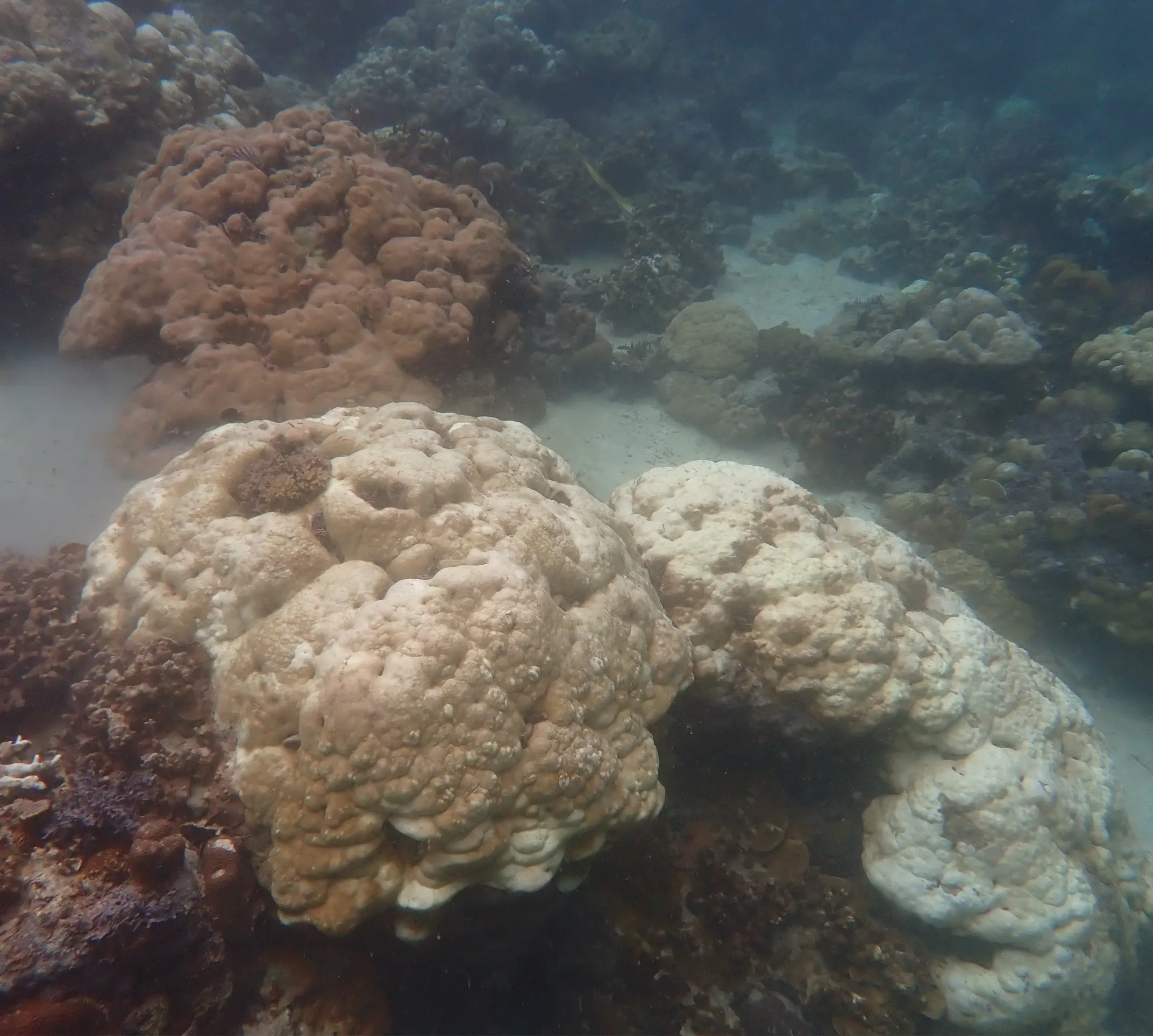
Coral colony shape and surface texture can provide important clues for identification, but they cannot always resolve evolutionary relationships. Environmental plasticity may make members of the same species look different, while distinct lineages can retain very similar appearances.
Why cryptic diversity matters for coral reefs
Different responses to environmental stress
Closely related coral lineages may differ in thermal tolerance, bleaching responses, and other physiological traits. Such differences are not guaranteed, but identifying lineage structure allows researchers to test whether apparently similar colonies respond differently to changing conditions.
Different symbiotic partnerships
Reef-building corals associate with photosynthetic dinoflagellates in the family Symbiodiniaceae, as well as diverse bacteria and other microorganisms. Symbiont and microbiome composition can vary with host genetics, environment, geography, and season. Studying these communities alongside host lineages helps reveal how evolutionary history and microbial partnerships interact.
Hidden biodiversity and conservation
If a widespread named species contains multiple distinct lineages, surveys based only on appearance may underestimate important biodiversity. Some lineages may have limited geographic distributions or different environmental requirements, which could matter for management decisions.
Implications for restoration
Coral restoration can benefit from considering genetic diversity, environmental suitability, and local adaptation. However, lineage labels alone cannot determine which colonies will survive at a restoration site. Genetic information should be integrated with ecological and physiological evidence.
How do scientists investigate cryptic lineages?
Researchers compare DNA sequences or genome-wide genetic markers to detect structure and infer evolutionary relationships. Phylogenetic analyses, population genetics, and species delimitation methods can help evaluate whether observed clusters reflect gene flow, historical separation, or independently evolving groups.
The strongest interpretations often come from integrative taxonomy, which combines genetic evidence with morphology, ecology, reproductive biology, and geography. A genetic cluster is an important clue, not a final species diagnosis.
What this means for my research
One question that interests me is how hidden genetic diversity may influence coral responses to environmental change. My doctoral research examines relationships among coral host genetics, Symbiodiniaceae, microbial communities, and environmental stress. Understanding these connections may help explain why colonies that look alike do not always behave alike.
For me, cryptic lineages illustrate why identifying a coral by appearance can be the beginning of a scientific investigation rather than the end of it.
The bigger picture
Evolution does not always produce tidy boundaries. Populations diverge, exchange genes, adapt, and sometimes become reproductively isolated. Cryptic lineages offer a window into those processes, but their taxonomic meaning must be evaluated carefully.
The next time you look at a coral reef, remember that its visible diversity may be only part of the story. Two colonies may look nearly identical yet belong to genetically distinct lineages. Whether those lineages represent separate species or variation within one species is a question for further research.
Sometimes the most important differences are the ones we cannot see.